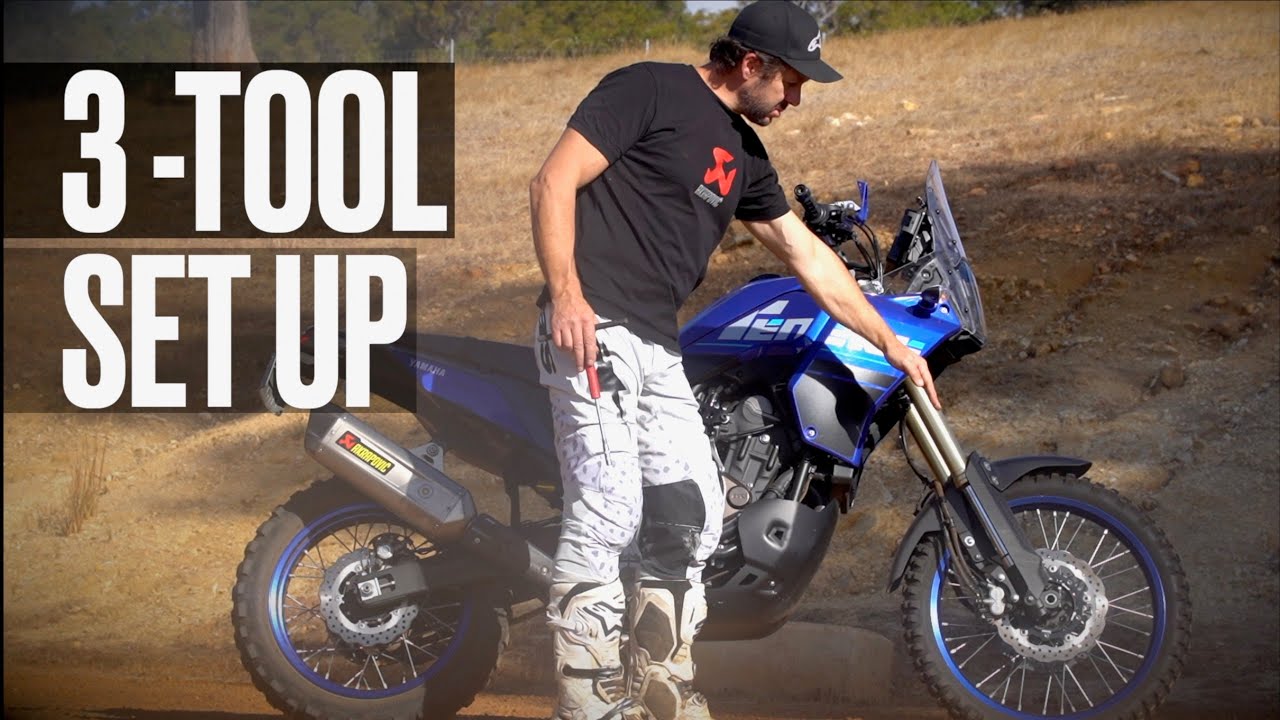
Motorcycle suspension has always been a knowledge blind spot for me. When I lived in LA, I had a suspension guy that I’d take my bikes to, have him do…his black magic stuff to set up the bike, then just ride it without really touching anything.
Before the club ride last weekend I referenced the recommended suspension settings for the 790 and dialed those in, choosing “Sport”. The ride was super harsh in the rocks, lots of chatter on washboards, and wanted to launch me on waterbars and whoops.
So I started a chat with Grok AI to have it teach me about suspension.
Next, I worked with it to create 4 suspension suites for the typical riding I do:
Rocky – everything we have above Boulder. I want the suspension to smooth out the rocks for me, with a plush, less fatiguing ride. I had it account for the relatively higher tire pressure I run in this terrain to avoid pinch flats. I run ~32psi front and rear.
Flowy, fast two track – Rampart, Westcreek, probably Johnny Park and the stuff around Redfeather. 26psi front and 24psi rear
Desert – high speed sand, whoops, rocks at speed, etc. 28-30psi
BDR – all-rounder settings with about 30-40 pounds of gear (guessing). Probably 32psi for longevity of the tire and good traction in a variety of terrain without having to adjust tire pressure across the day.
I then found a break in the weather last Sunday to go back to Switzerland and do test runs of the section from Gold Hill Rd to just past the stone chimney. This bit has a little bit of everything – a small, tight whoops section, larger whoops, and embedded rocks. I referenced my notes and made adjustments, making the bike more plush on the rocks and hitting whoops and waterbars at speed with control of the rear end.
Then last week I borrowed @mulebarn Slacker suspension tool to set sag on the bike with my EDC, daily-ride loadout. The tool makes it dead simple to measure and set sag. Note that setting your slack should be your first step.
I dialed in the Flowy Two Track suite of settings before yesterday’s ride and the bike performed flawlessly. Planted in all situations, floating over washboards, and very balanced (rear end not launching) when hitting whoops or waterbars at speed.
The end result is that I’ve notes on my phone:
Current suspension settings
My four settings suites above
I had it create reference tables for me to use in the field. IE, if the front end is doing this, change that, etc.
So the summary of how I’d do this process again:
Use an AI of your choice to learn you up on All Things Suspension. Focus on having it distill everything down to simple how-to notes you can save to your phone, for reference.
Set your sag
Have it create suites of suspension settings for the riding you do
Go back and forth on this section of Switzerland to refine the recommended settings. I found small areas in this section where cell signal was good enough to me to have “live” conversations with Grok to help me out in real time, then I hit the WiFi at Gold Hill, while having The Cookie, to refine my notes, etc.
Put all of this into your phone so you can reference it all anywhere, and use the notes to dial in your suspension for the terrain you’ll be riding that day, if you really want to dork out on this stuff.
Great write up. That little section of Switzerland is where I have always tested moto suspension. It’s perfect for the kind of riding we do.
Suspension topics can feel like an absolute black hole if you aren’t familiar with certain concepts, but suspension off-road is one of the most important aspects of safety. So many crashes happen because people get bucked off their bikes or the bike washes out where it shouldn’t.
ATMO, Adam does a really good job of leaving anything technical out of it for someone who is just getting started in this video below. The entire video is excellent in a bare bones layman’s way, and the suspension stuff starts at about 9:00. It’s basically a simple visualization of what Rich describes above.
Everything with regards to suspension is predicated on having the right springs for your weight for a day ride, and your luggage for trips. There has to be a compromise since we all do both, so you want to pick a spring rate that puts you in the middle where it’s not a race bike, but it’s not over sprung either. Most bikes come from the factory sprung for a total weight of about 170 to 185 pounds. If you don’t sit in that range with all your gear, it’s time to rethink which springs are in your bike. The good thing is that spring changes, even if you have someone else to do it (I do), are usually just a couple hundred or a few hundred dollars, depending on the bike.
And suspension is one of the best ROI areas to spend time or money on your bike. Much better than aftermarket airbox, exhaust, ECU and other performance focused mods.
I’m amazed at how many riders I talk to that have never set sag on their bikes. People completely misunderstand the role of spring rates and sag settings, which are the first step in any suspension set up.
Spring rates and sag settings are about geometry, not hard and soft. If the bike geometry is off when you sit on it it won’t steer right. If it’s not in the right part of the stroke then you’re not getting the benefit of the long-travel suspension on that fancy adv bike.
I’d also encourage people to not be afraid of the clickers. They’re not magic. You won’t “screw it all up”. Just make a note of where they are, then you can always go back.
Then try big changes so you can feel what they do. I think most people think if the manual/suspension guy says 12 clicks of rebound or compression is right then they’ll only try a 10-14 click range but they don’t have a sense of what direction does what. Try full soft/full hard settings. Ride the bike. Fool around with it. If it doesn’t work, go back to the beginning.
That’s what’s so cool about that section of Switzerland. Super quick and easy to get to and short, so you can hit the same stuff over and over again and observe how change X results in Y feel.
Of course all of this is enabled / limited by the suspension adjustments available on your bike. The 790/890 suspension is rather premium out of the box and very adjustable. YMMV
Spring rate, preload, and damping also effects chassis balance and cornering even on smoother trails. A bike that steers heavy and pushes the front end (understeer) or knifes-in (oversteer) feels unstable or head shakes are all factors influenced by suspension settings. Traction is heavily affected as well. Settings that allow for correct weight transfer under acceleration and deceleration improve mechanical grip. It’s not just the tires…
Note that the base settings are not provided in Rich’s chart; just the direction of damping adjustment required to address what you are feeling. Some bike’s adjusters are more sensitive than others, and the total amount of adjustment range available is important as well. 3-clicks on a shock with 12 low speed adjustment increments is a larger net change than 3-clicks on a shock with 18 or 20 increments. You need to know the range of available adjustment, where the adjusters are located for your bike, the recommended preload setting (measurement), and base damping settings from the manual for your bike. Typically the damping settings are given as the number of clicks out from fully closed, clockwise all the way in, then backed out X number of clicks.
If you do not have a manual. You can gently max the damping adjusters in both directions and count the total number of (clicks) increments available–don’t count the 1/2 click at the end if you feel it, count the first full definitive click as max. Start off with all adjusters in the middle setting. Some adjusters have no click increments, assume 1/8 of a 360 degree rotation is the equivalent.
There are two preload measurements, static and rider. Once rider (in your gear) sag is set the static sag will indicate if your spring rate is correct. Rider sag is set from a 1/4-1/3 of total travel. For bikes with less total travel, set closer to a 1/4 and for longer travel set closer to 1/3. (1/3 for an enduro bike, 1/4 for a shorter travel ADV bike) I consider my Tuareg with 240mm mid travel and run about 68-70mm of rider sag. Static sag (bike under it’s own weight) should be 1/3 of rider sag. If it is more or less then the spring rate is not ideal. If it is less than one third, the spring rate is to low; if it is more than 1/3 the spring rate is too high. That seems counter intuitive but it is determined by the amount the spring is compressed to achieve the correct sag. A lower rate spring is compressed more to a achieve the correct rider sag, so its static effective rate starts higher and reduces the static sag measurement.
Compression and rebound damping can overlap in terms of their effect on what you may be feeling. Too much rebound can make the compression damping feel harsh, because when the suspension stays compressed (packed) and does not return to an extended state quickly enough it is less reactive to successive hits. There is a difference between harshness caused by suspension packing (rebound) and harshness caused by too much compression damping. Too much compression damping typically feels more like chatter and deflection while too much rebound feels like a dead thud or low grade bottoming.
What sag settings were you using? I’ve seen two different numbers recommended for the 790/890. I can’t remember which I started with, but I’m going to start all over.